
Created by: 100 B. Last
Approved by: J. Freedom
1.0 Introduction

2.0 Operations
3.0 Basic CVE Information
4.0 Commercial Vehicles
5.0 Uniforms & Vehicles
1.0 Introduction

This handbook will guide you towards success in Commercial Vehicle Enforcement and how to handle situations in dealing with professionalism and courtesy dealing with all kinds of commercial vehicles from tractor trailers to garbage trucks. You will learn what is expected of you when you wear the CVE uniform and drive the CVE only vehicle. Anything not stated, please look at SAHP policies.
Commercial Vehicle Enforcement operates with the purpose to reduce the risk of accidents and enforce the relevant safety regulations and laws governing commercial vehicles.
If you disrespect the uniforms or policies you can expect to be suspended from CVE duties.
2.0 Operations
- CVE units can respond to 911 calls and back up requests that will not take you out of your area of operation and are within 2 miles of your location;
- Use your own discretion when responding to 911 calls and backup requests. Remember your main duty is CVE. 911 calls and backup requests are secondary.
- If a CVE unit sees a crime or ticketable offence they may intervene. As CVE you are still a member of the SAHP and responsible for upholding the law and maintaining public safety.
- CVE units can pull over any commercial vehicle to conduct a vehicle inspection, a traffic offence does not have to be witnessed or reported first;
- Whenever a commercial vehicle is pulled over you must check the drivers paperwork and electronic logs, what the vehicle is carrying & if it is secured properly, the weight of the vehicle and if the vehicle is roadworthy. This includes the standard traffic stop checks;
- CVE checkpoints must be approved ahead of time;
- All SAHP troopers can respond to CVE calls. Most SAHP vehicles do not have room for the weights that are used to weigh CVE vehicles, other than the Tahoe. This means if you are not CVE equipped, you can still go over the electronic logs, paperwork, cargo inspection and vehicle inspection;
- CVE can be ran on both public and whitelist no more than two active CVE units can be on a server at a time;
- CVE units can conduct ride alongs on the public server;
- CVE units will wear high vis vest when operating on the highway, no matter the time of day; and
- CVE units should not transport arrested persons.
Radio Communications
- Traffic Stop will be announced as a routine traffic stop;
- If a Supervisor is required, you should request a CVE Supervisor;
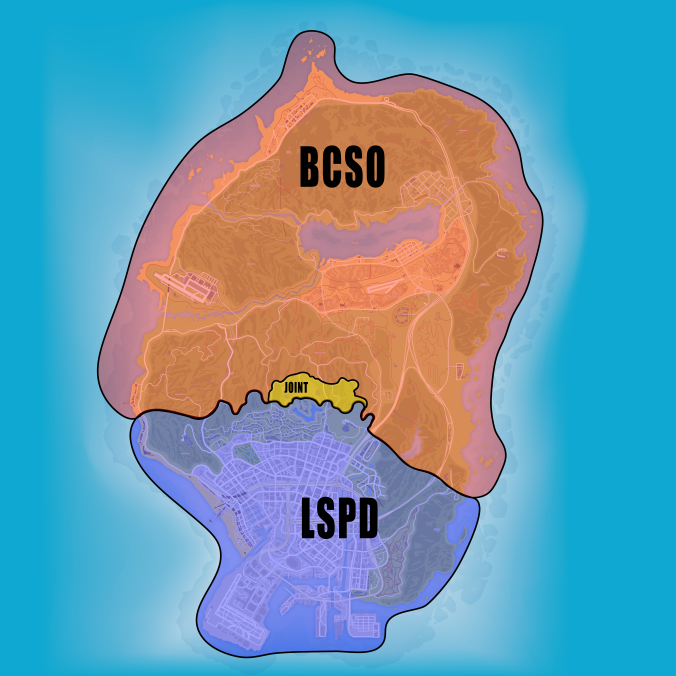
- When going 10-8 for the first time, you must call over statewide, declaring which jurisdiction you are in. such as: “SanAndreas 104 10-8 CVE (North or South)”; and
- North and South jurisdictions are implemented when there is the maximum of two CVE Troopers on duty. In which, the two need to choose either to Patrol BCSO’s Jurisdiction or LSPD’s Jurisdiction. Not to be in the same Jurisdiction.
3.0 Basic Information
In order for a CVE vehicle to be compliant, certain criteria must be met upon inspection, should these criteria not be met, a violation may have occurred and should be enforced.
- Electronic logs: This keeps track of a driver’s hours of service. CVE uses the 11 hour clock, this means a driver may operate for a maximum of 11 hours after 10 consecutive hours off;
- License, Registration & Insurance: Just like all over drivers in San Andreas, commercial vehicles must still have the correct standard paperwork. A violation of these three is non considered a CVE offence but must still be enforced by the Trooper;
- Bill of Lading (BOL): The Bill of Lading outlines the commercial contents of the vehicle, and must match that within the vehicle;
- Weight: The weight of any given vehicle & it’s contents must not exceed 80,000 Lbs, any violation of this can render the vehicle unroadworthy; and
- Load Securement: All equipment must be secured properly, this includes the contents in the rear of a vehicle or on a trailer, including spare tires. Fuel tanks must also be secure, not just to the vehicle but also not leaking or having any non-superficial damage that may cause an accident.
It is worth noting that in the event of receiving backup or a CVE supervisor, only the individual who initiated the stop will be able to use the commercial vehicle menu.
When attempting to pull over a semi-trailer truck, you may have to pull alongside the cab of the vehicle in order to get them to pull over successfully.
You may also wish to search the commercial contents of the vehicle to ensure that the documentation is correct. You must do this through the commercial vehicle menu, not the standard ‘search ped/vehicle’.
4.0 Commercial Vehicles
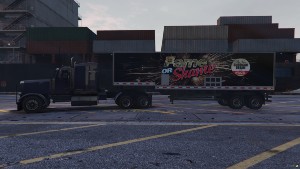
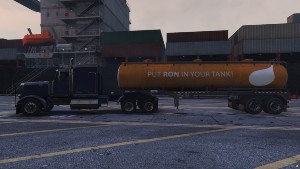
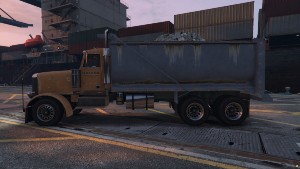
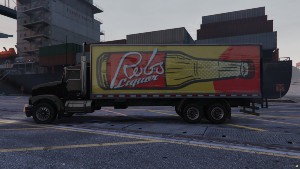
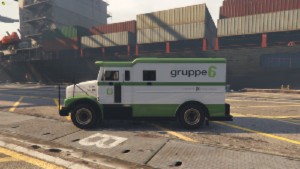
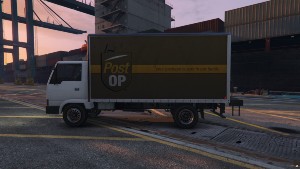
The following is a list of the sort of commercial vehicles you may spot whilst on duty.
5.0 Uniforms & Vehicles
CVE Uniform
Troopers running CVE have access to a uniform separate from the standard Class A & Bs. This uniform still must match its own criteria and you are held to the same standard when operating in uniform.
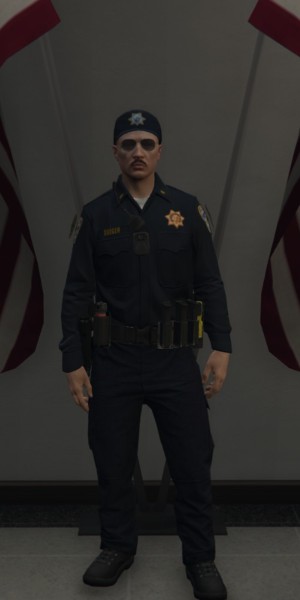
| Hats & Helmets – #44 Texture 1 |
| Upper Body – Several available Any gloves worn must be black in colour and fit for purpose. |
| Lower Body – #86 Texture 11 – Others Available Must be dark blue in colour & fit for purpose |
| Shoes – #24 or 25 |
| Shirt & Accessory – #37, 40, 49 & 53 |
| Body Armour – #29 |
| Scarfs/Chains – #2 or 5 |
| Shirt/Jacket Overlay – #32 Texture 1 |
CVE Vehicles
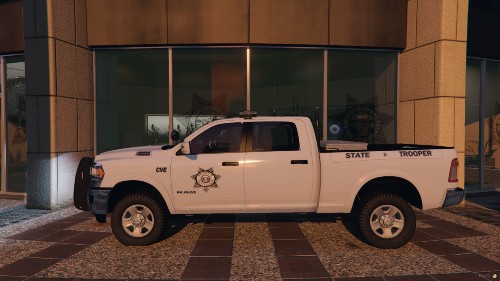
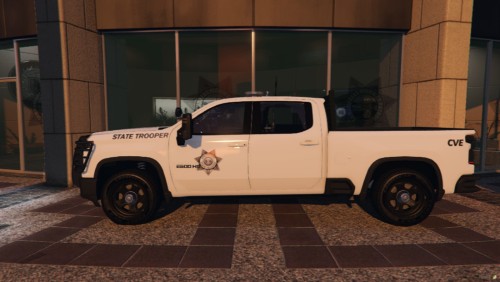
The Commercial Vehicle Enforcement team have 2 vehicles at their disposal, one of which is exclusively CVE.
Dodge Ram
Chevy Silverado
Vehicle Specifications
CVE units must remain marked with the CVE livery at all times.
CVE units must remain ‘Ice White’ as seen in the images.
The two CVE units may use the same vehicles at the same time.