

Created by: [100] B. Last
Consulted by: [101] W. Tylerus
Approved by: J. Freedom
1.0 Roles

2.0 Procedures
3.0 Training & Uniforms
1.0 Roles

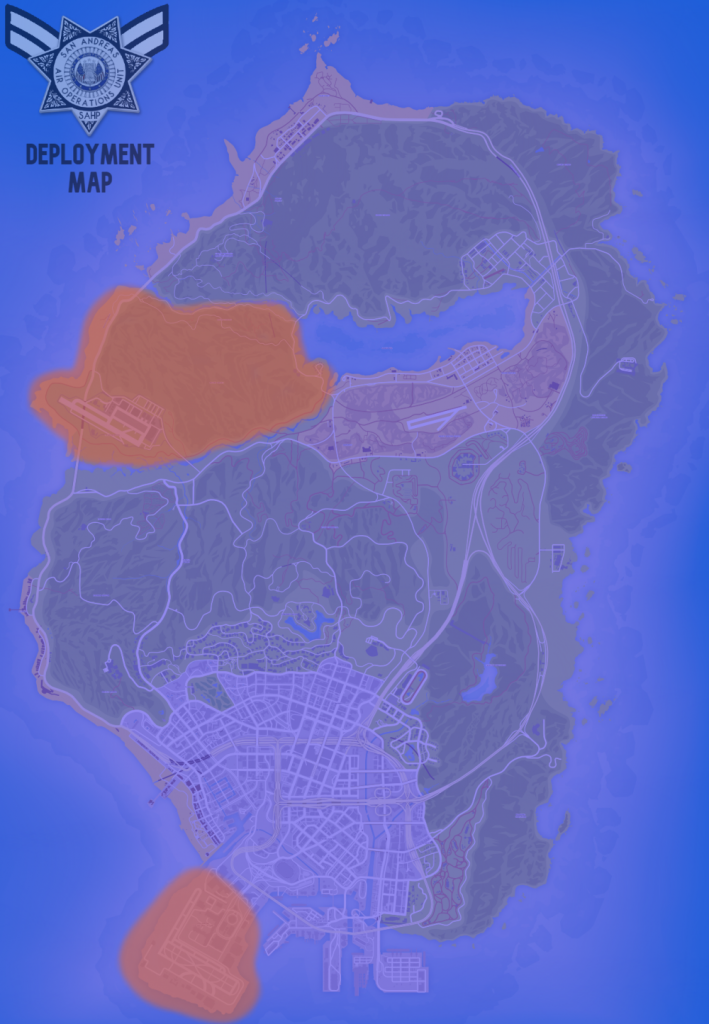
The San Andreas Air Operations Unit, hereafter referred to as the AOU operates as statewide air support for multiple agencies and their departments. It holds multiple roles, which are divided into primary & secondary functions. When active the AOU is referred to as State Air One.
Primary Roles
- 10-80/10-80 Foxtrot Support
Before joining the pursuit, the pilots must obtain the following information from the responding officer(s). Location, direction, description of subject and speed if in a vehicle.
Once on scene State Air One will take callouts for the 10-80 and coordinate relevant units to apprehend the suspect.
In the event of a bail out by occupants of a vehicle, State Air One should track the driver as a priority unless otherwise stated.
- Perimeter Control
Before attending the scene State Air One must obtain the location of the area of operations, the risks associated and any suspects that may be within the perimeter.
State Air One will proceed to actively patrol the perimeter, liaising with any units on scene. State Air One may use the spotlights to assist in the search and identification of a specific area.
Secondary Roles
- Operational Support
State Air One will obtain relevant information in regards to the use of the AOU, location and risk assessment from the operations command structure.
State Air One is under the supervision of the relevant operational command and is not independent of their structure.
- Search & Rescue
State Air One will immediately respond to the area of operation whilst obtaining further information on the way, they will conduct a preliminary fly over of the area. A search pattern will then be agreed with involved units with State Air One coordinating any eventual finding of the subject.
- Evacuations
Planning will take place between relevant units, with the aim to maximize the capabilities of State Air One. A rendezvous point should be established where the AOU should relocate the evacuees, with important information such as no. of passengers and any injured parties should be relayed.
2.0 Procedures
Preflight
- The AOU will obtain the relevant weather reports for the area.
- A 360 degree inspection of the exterior of State Air One.
- Ensure the fuel tank is full and battery charged.
- Checking all instruments and air control surfaces are functional and maintained.
- Finally radio calling to declare 10-8.
Flight and Safety
- Safety while in flight is priority.
- All flights will be done with one pilot and one co pilot.
- All flight speeds will not exceed 50 mph.
- No flight should exceed 4000 ft in altitude.
- All pilots will have first aid kits and flotation device at all times.
- At no time should a flight go through military airspace.
- If heavy weather is incurred, cancel the flight and return to base.
- No flight will be permitted in heavy weather.
- Pilots will always scan for emergency landing spots that is avoid of civilians and obstacles to avoid any collateral damage
- All Pilots on flight most be on same radio & teamspeak channel.
Take off & Landing
- Pilots will insure aircraft is clear before engine start up.
- Once the area is cleared the engine will be started.
- Pilots will radio in to command staff they are ready for takeoff and a commander will then give them authorization for take off.
- Once authorized the pilots can take off gain altitude and proceed with their mission.
Emergency Landing
- During flights pilots will be aware of possible landing areas in case of an emergency.
- pilots should be looking for open ground away from people & buildings.
- If an emergency landing occurs pilots will radio in (emergency emergency state air one attempting emergency landing) followed by your location & circumstances.
- If emergency landing is successful, cut all power and fuel to the aircraft off.
- Check for injuries if possible exit the aircraft and move a safe distance from it.
- wait for ground personnel to arrive.
Pursuit Flight
- When a 10-80 request comes in pilots will radio to the responding officer their 10-17 and obtain information on the suspect ie Location,vehicle,direction,description of suspect and speed.
- Once you arrive at the 10-80 the co-pilot will conduct call outs for the 10-80 to let the pilot concentrate on flying.
- Make sure to keep a constant air speed with the 10-80.
- State air one will stay on scene until code 4 has been given from ground units.
Perimeter Control Flight
- Before getting on scene Pilots will obtain location and description of suspect.
- Once on scene pilots should establish a safe flight path around the perimeter.
- Pilots will respond to any request from ground units.
- Co-pilot will handel visual observation of the perimeter and radio calls.
SAR (Search and Rescue)
- Before search and rescue flight is conducted pilots will get with SAR Command staff or the lead officer on the search to obtain information on the search.
- Once on scene pilots will fly over the search area and determine the best search and rescue flight path.
- Once the search and rescue flight path is chosen the pilot will start the flight with co-pilot handling visual obesity of the search area and radio calls to ground units.
- Once located pilots will coordinate with ground units to the rescue area.
Code of conduct and Uniform code
- All pilots are expected to carry themselves professionally at all times.
- No flight will take place without authorization.
- All pilots must meet the uniform code.
- All pilots must complete training.
- Each flight most have a pilot and copilot.
3.0 Training & Uniforms
Training
Training will take place on the whitelist server at los santos international airport, conducted by the command staff and will consist of hands-on practice, including:
- System and aircraft checks
- Takeoff and landing
- Sustained flight
- Hovering
- Emergency landing
- Radios
Once training is completed trainee will take a written test and a final exam flight.
If trainees pass their test and exam flight they will be permitted to carry out Aviation duties.
Uniforms
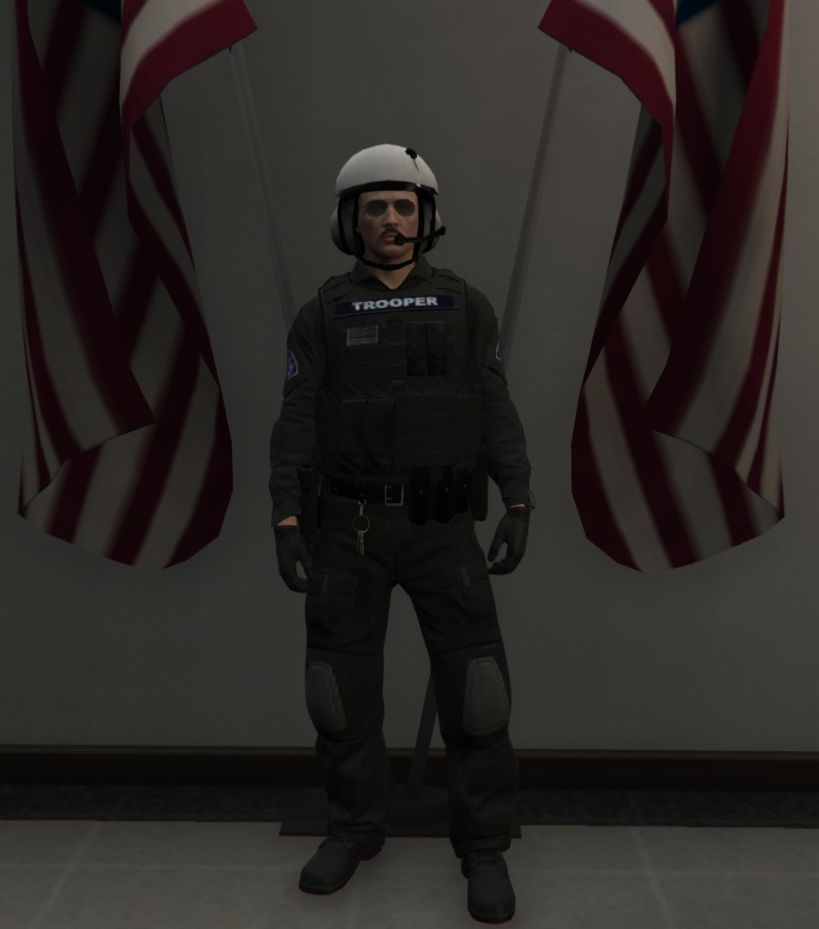
| Mask 0 |
| Upper body 33 |
| Lower body 34 |
| Bags 0 |
| Shoes 51 |
| Scarfs & chains 2 |
| Shirt & accessories 57 |
| Badges & logos 0 |
| Shirt overlay 6 |
| Hats & helmets 78 |
| Glasses 5 |
| Watches 3 |